Here are three notable organisations / protocols that provide decentralised funding or financing infrastructure for environmental-science / nature-based projects. They vary in maturity and focus, but each offers a model you might engage with for your goals (e.g., in the global science/DAO/funding-space you’re working in, Виктор). organizations provide
1. Open Forest Protocol (OFP)

6
What they do:
- OFP is a blockchain protocol built on the NEAR network, focused on the measurement, reporting & verification (MRV) of forest-projects (e.g., afforestation/reforestation) in a decentralised, open-source way. Medium+2
- They issue a governance/utility token (OPN) and plan for a DAO to govern the protocol. ReFi DAO+1
- The idea: enable smaller forest-projects anywhere in the world to access transparent carbon-financing and participate in a global registry of forest data. openforestprotocol.org+1
Why this is relevant:
- Since you’re working in science + blockchain + global funding, OFP is a strong example of “science/nature + protocol + decentralised governance + token/incentive structure”.
- It offers a template for combining on-chain tools (MRV, NFTs of land project units) with funding flows for environmental science.
Considerations:
- It’s still in development and evolving; governance, tokenomics, regulatory compliance are non-trivial.
- For your purposes (e.g., designing your own funding model for science), you could study their mechanism of how projects register, how validators operate, how funds flow.
2. Toucan Protocol
6
What they do:
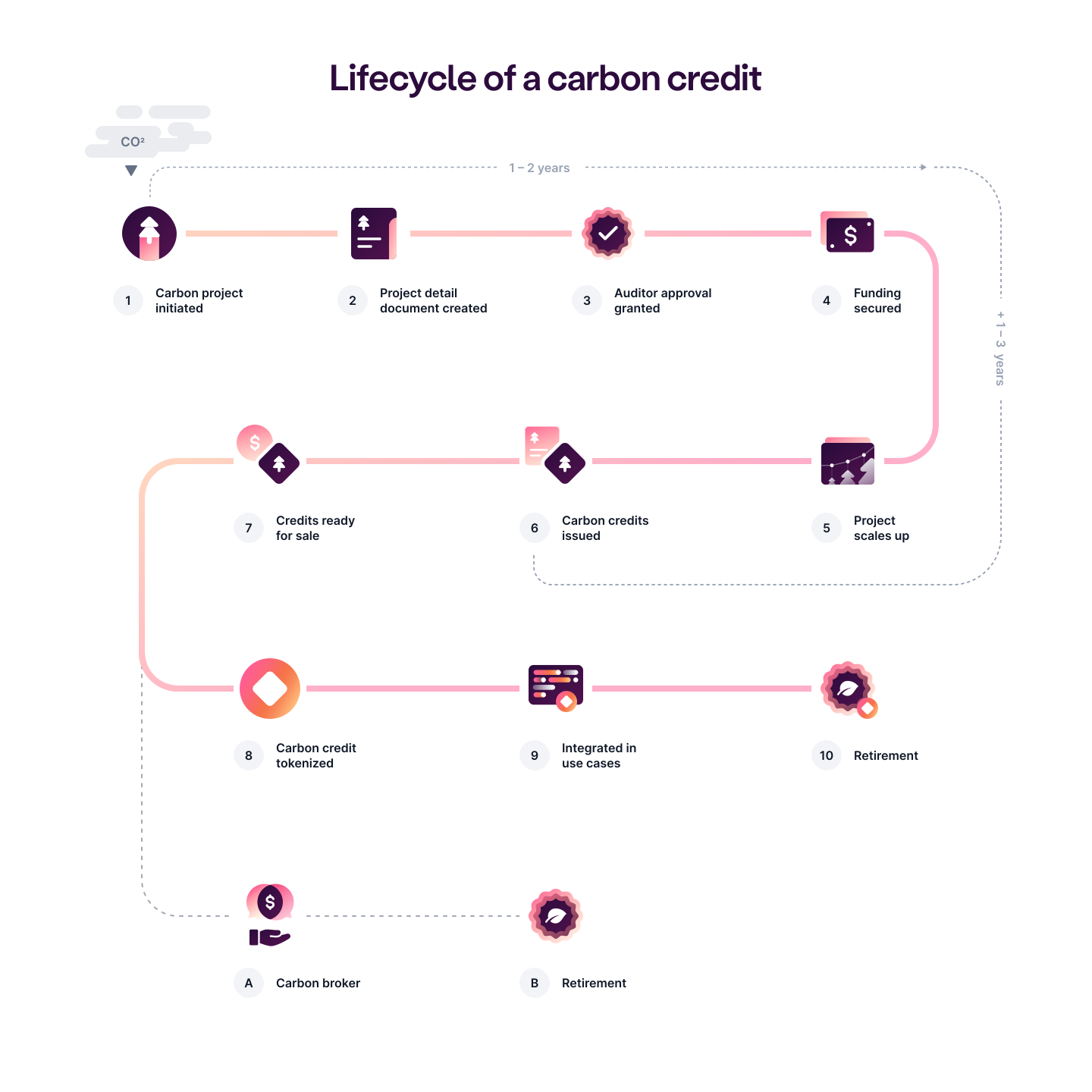
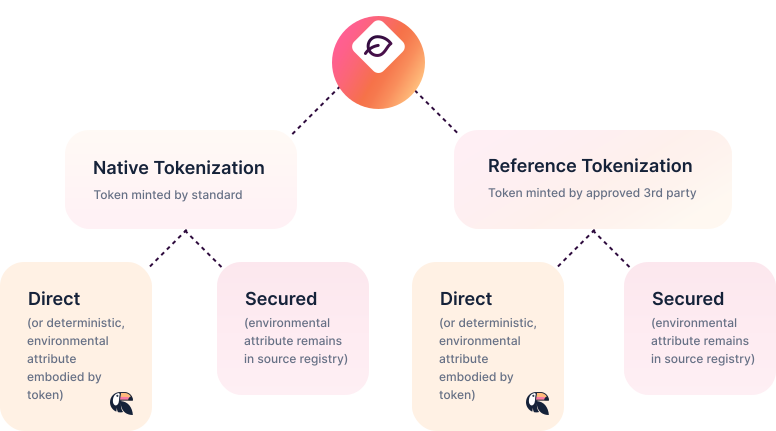
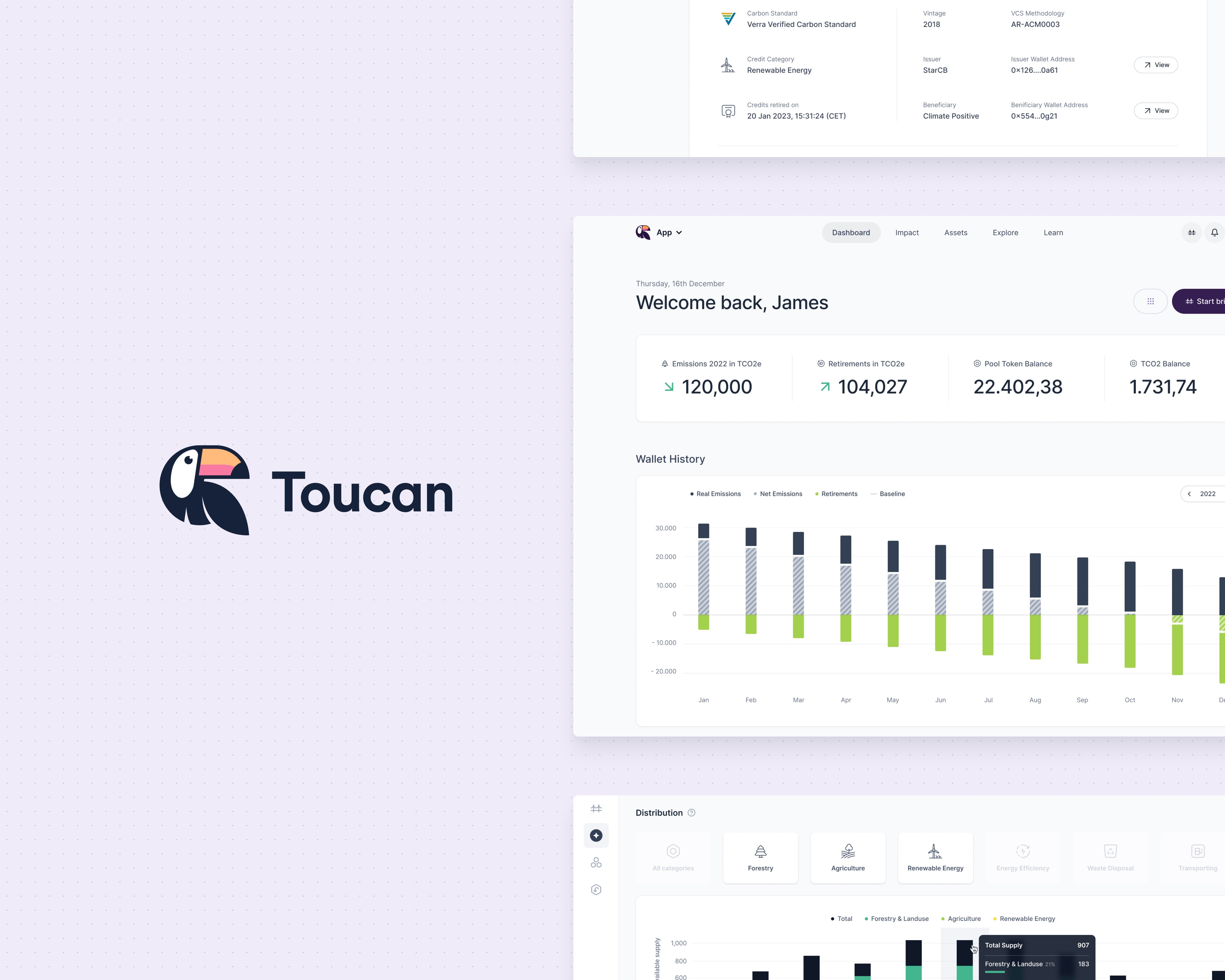
- Toucan offers infrastructure to tokenise carbon credits (i.e., nature-based environmental assets) and bring them on-chain, enabling more liquid markets and transparent tracking. Toucan+1
- They position themselves as “digital rails for climate finance” — helping project developers to access capital, and buyers to assess risk/data transparency. Toucan
- They are used by ReFi (Regenerative Finance) and ecosystem players, bridging traditional carbon credits into blockchain-enabled markets. Causeartist
Why this is relevant:
- Given your interest in blockchain + funding + science, this is a good case of “protocol for environmental science / nature-based solutions” that uses decentralised finance / tokenisation to mobilise funding.
- If you’re thinking of building or participating in a funding mechanism for environmental science, Toucan shows how asset tokenisation + DAO/infrastructure can work.
Considerations:
- Tokenised carbon markets are still under scrutiny (standards, audit, credibility). For example, there are regulatory / standard-body concerns about tokenising “retired” credits. Supra
- For a science funding model (versus pure carbon offset trading) you’d need to consider how your funding mechanism aligns with scientific integrity, measurement, publishability, etc.
3. This Is My Earth (TiME)

6
What they do:
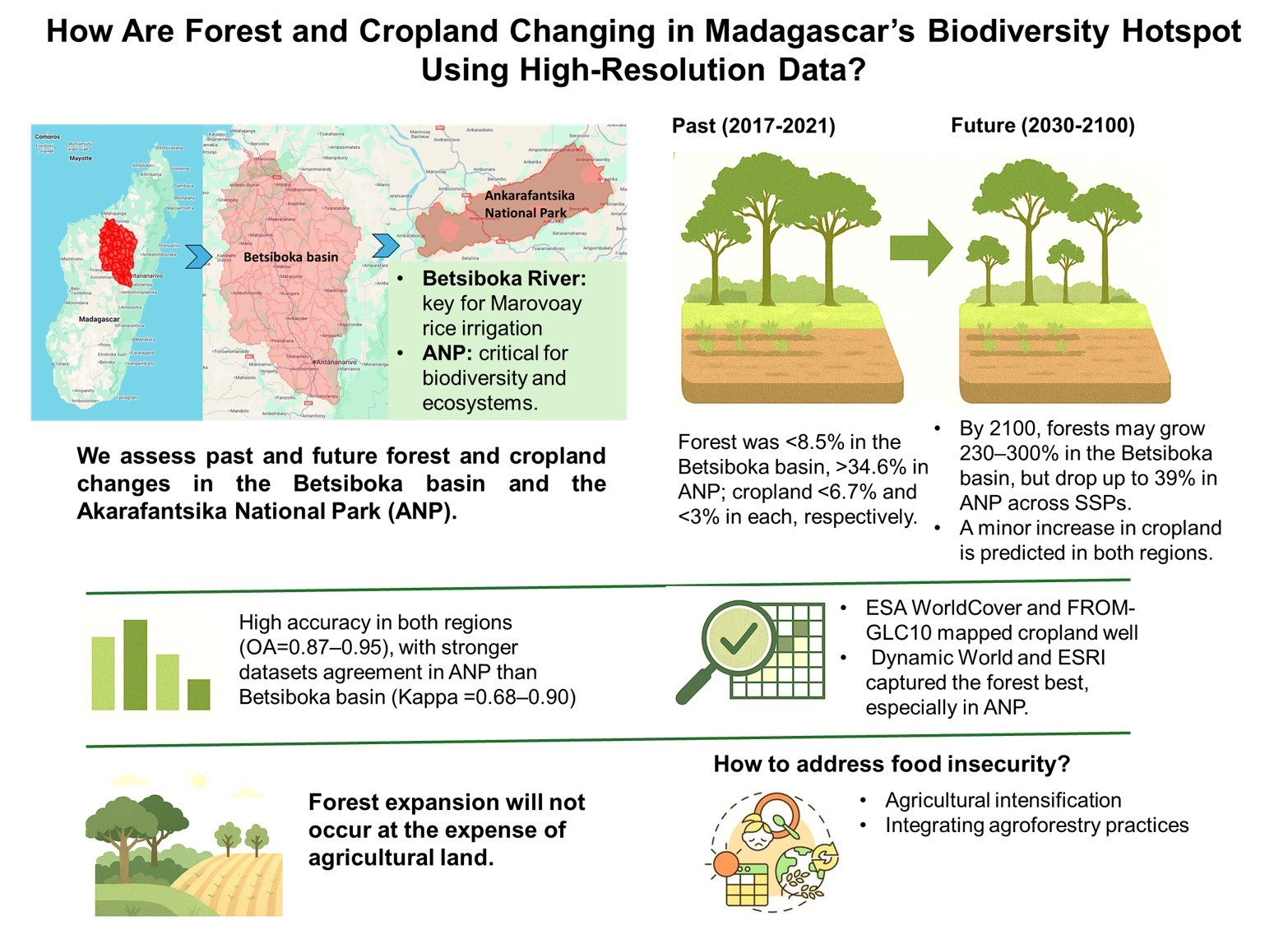
- TiME is a non-profit founded in 2015, that uses a crowd-funding + democratic voting model to finance land-purchases in biodiversity hotspots. Wikipedia
- Each member (regardless of donation size) has an equal vote to decide which scientifically vetted conservation project receives funding that year. Wikipedia
- It’s not strictly blockchain-based, but it is a decentralised (in governance) funding mechanism for environmental science/conservation.
Why this is relevant:
- It offers a science funding governance model that emphasises decentralisation of decision-making (equal vote), which might inspire models you design for your global science-funding ecosystem.
- Although not tokenised or Web3 native, it shows how democratized funding can be structured for environmental science.
Considerations:
- Because it is not tokenised and not on-chain, it lacks some of the transparency/programmability benefits of Web3 protocols.
- To adapt a model like this into your blockchain-/DAO®-oriented science-funding architecture, you’d likely enrich it with on-chain tokens, smart-contract governance, audit trails etc.
Summary & How You Could Leverage This
- If you’re designing or planning a funding mechanism for environmental science (or science more broadly) that uses blockchain / decentralised governance, these three examples give you different points on the spectrum: from full Web3 protocol (OFP), to tokenised asset bridge (Toucan), to democratic crowd-funding (TiME).
- You might map out for your platform: (a) what kind of projects you fund (environmental science, conservation, nature-based solutions), (b) how funding flows (token grants, milestone-based, DAO vote, community stake), (c) how governance is structured (token-governance, equal vote, reputation voting), (d) how transparency / measurement is assured (MRV, on-chain data, publication requirement), and (e) how you integrate with existing ecosystems (carbon markets, academic science, NGOs).
Given your “global science + blockchain + funding” interest, a hybrid model might serve you: a DAO that allocates grants to environmental science projects, where project data is published, progress is tokenised in some way, and community stakeholders vote or allocate funds. These examples show what’s possible and the pitfalls to watch (audit, token-governance concentration, regulatory alignment).
👉 Help fund the next public test of AIIM.
Help Test a New Way to Fund Science
AI Internet-Meritocracy (AIIM) is an operational beta designed to allocate available donations to researchers and open-source developers using AI-assisted evaluation of documented contributions. Payment transactions are already recorded on-chain.
The next major evidence milestone is a proposed five-month public adversarial test of the allocation model, with $1,000 distributed to eligible funding recipients. Donations help pay for the development, infrastructure, reviewer and participant recruitment, outreach, and operating work needed to reach and evaluate that milestone.
You do not need to assume AIIM is already proven to support the project. Your donation helps turn the proposal into evidence: what works, what fails, and what should change.
Support the next testing milestone → Read the test proposal →
Independent review
Researchers and technical reviewers: independent criticism is welcome, including negative conclusions. Review AIIM’s assumptions, governance, failure modes, and testing plan →
Research status: AIIM remains experimental. AI-generated evaluations can contain factual errors or biases, and decentralized governance and non-custodial components remain under development. That uncertainty is why public testing, auditability, and external criticism are central to the project.